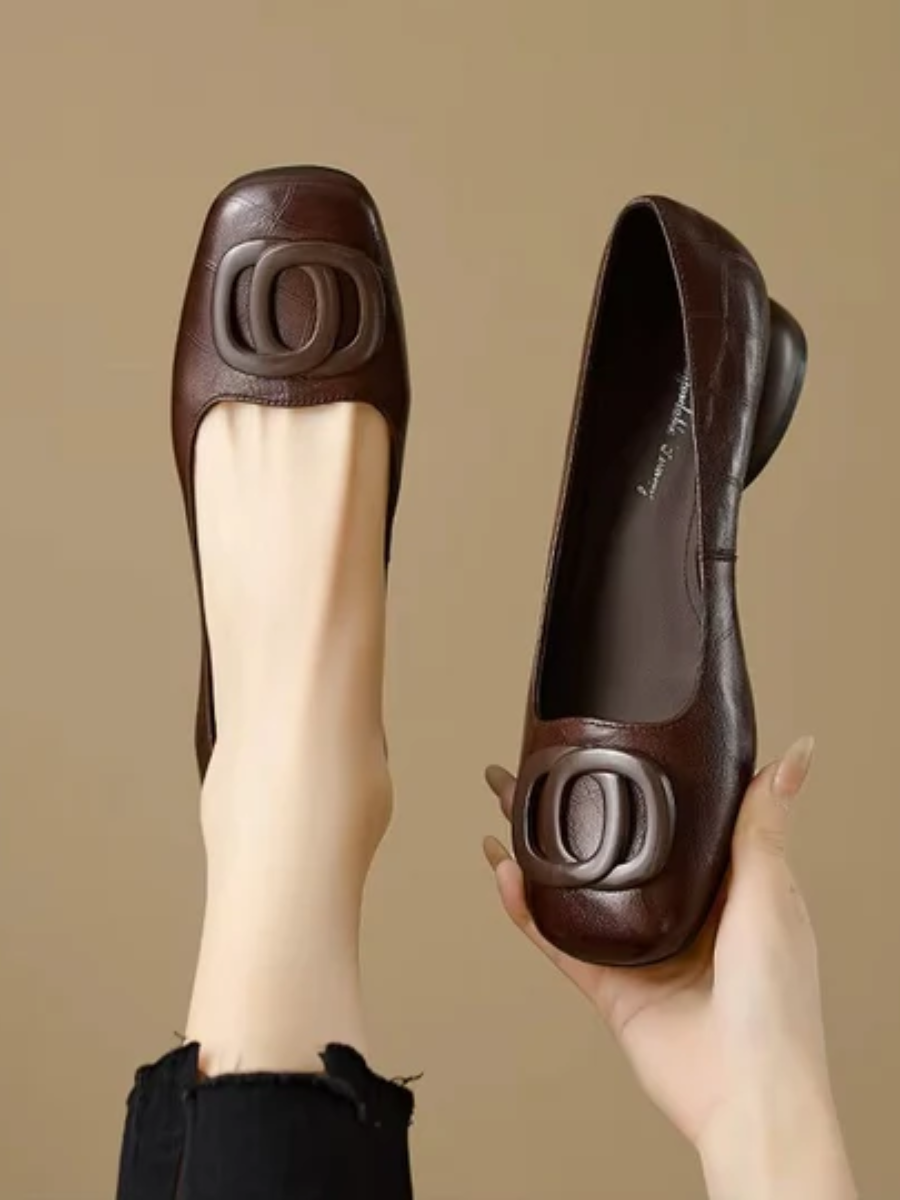
The Opium Leather Flats · An editorial
Every leather flat under $100 cuts corners somewhere. Here are the five places it usually happens — and why you can feel each one by three in the afternoon.
There is a small, specific moment that happens in shoe shops constantly, and once you have noticed it you cannot stop seeing it.
A woman picks up a flat. Turns it over. Presses her thumb into the sole. Looks at it a second longer than she needs to. And puts it back.
She is not being difficult. She is doing arithmetic. She has learned that a flat this pretty is going to be thin, and that a flat which is not thin will come in one shade of taupe and make her look like she has given something up. She has bought both. She has a drawer.
So she puts it back, and she is right to.
The trade-off she is making isn’t a law of physics. It’s a list of five places where a flat gets cheaper to manufacture.
Every one of them is something you can feel by mid-afternoon without ever knowing what you are feeling. Here is the list. The fourth is the one almost nobody thinks to check, and it is the one that decides your afternoon.
01
Your foot is widest across the ball. That is precisely where most flats begin to narrow, because a tapered toe is cheaper to pattern, cheaper to cut, and photographs longer.
So your toes get drawn in toward each other and held there. Not painfully — not in the first ten minutes. But your foot spends the entire day mildly braced against a shape that does not match it, and bracing is work.
A structured square toe. The front edge stays straight, so width is carried all the way forward instead of pinching in at the widest point. Your toes lie flat.
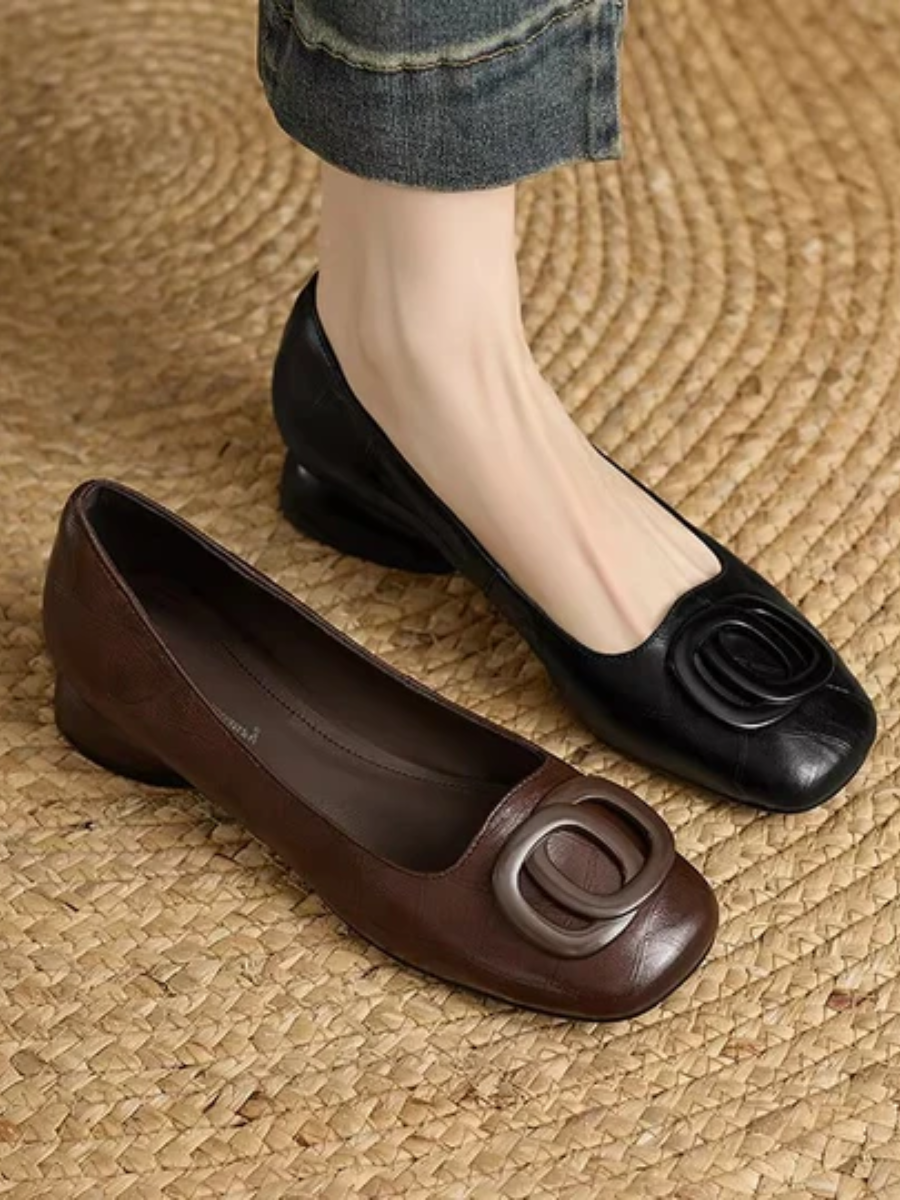
02
It is almost never the sides of your foot that give out. It is the ball and the heel — the two places that take the load — and it starts somewhere in the fourth hour.
A thin lining over a hard base is the single most common shortcut in this entire category, and it is invisible in a photograph. You find out about it on pavement, not in a fitting room.
A cushioned footbed. That is not an exciting sentence. It is the reason you can still be wearing them at nine in the evening.
03
A stiff sole means your foot has to overcome the shoe on every single step. Do that a few thousand times and you feel it, even though you would never name the sole as the culprit.
The sole is flexible from the first day. There is nothing to break in. We have no patience for a shoe you have to suffer through for a fortnight before it starts behaving.
04
This is the one people skip past, and it is the one that determines whether the shoe gets better or worse with time.
Real leather moulds to your foot. Six weeks in, it is more yours than it was on day one. A coated synthetic cannot do that — it is sealed. It does not stretch where you need it to, it does not breathe, and eventually it cracks along exactly the crease where your foot bends.
Genuine leather. Not faux. Not leather-look. That is most of why it costs what it costs, and all of why it will still be worth wearing in two years.
05
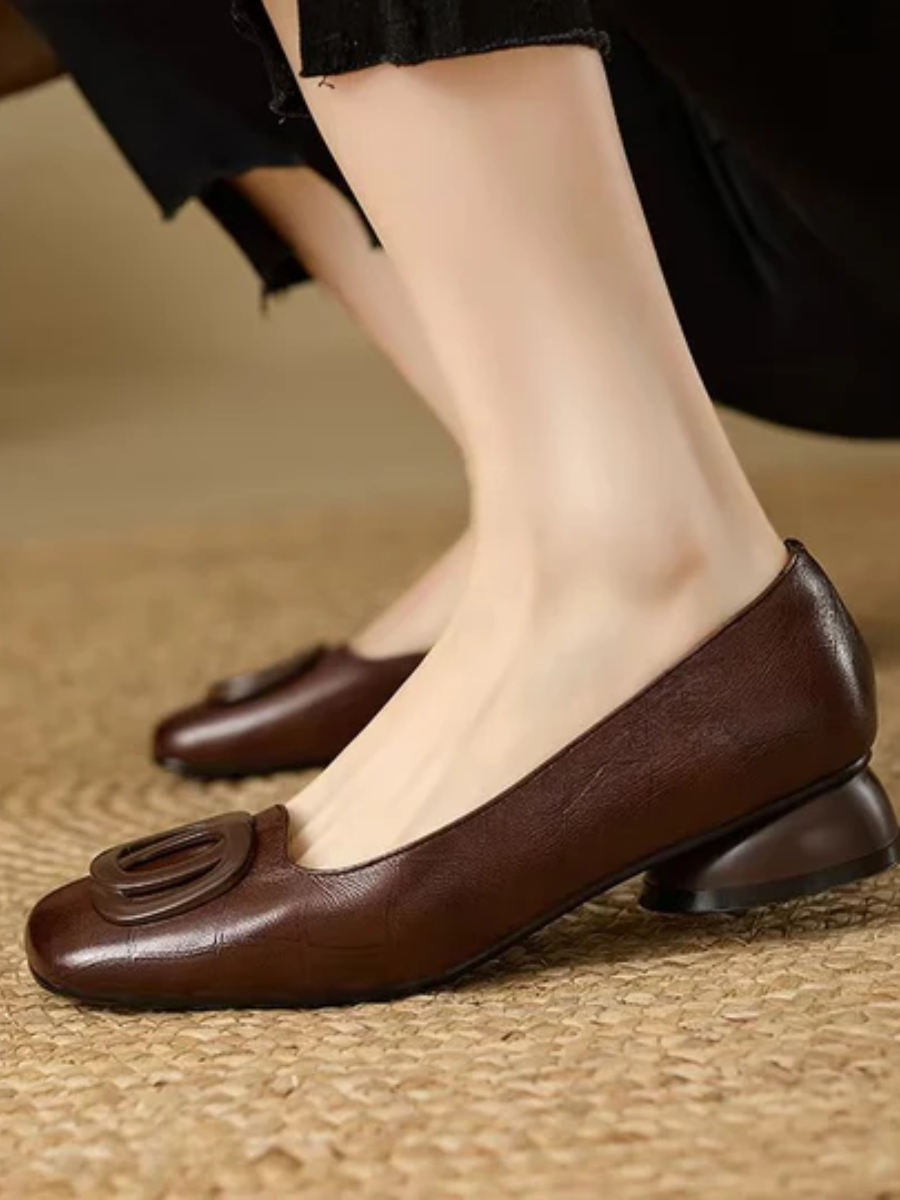
A plain flat is a fine thing and a slightly unfinished one. So there is one piece of hardware across the toe, and nothing else.
One detail lifts a shoe out of the errand category. Three ideas on one shoe belong to a season. One belongs to a wardrobe.
Not one of these five things is exotic. There is no patented technology and no invented science. They are the five places where a flat gets cheaper, and we did not take any of them.
That is the whole product. A black leather flat with a square toe, a cushioned footbed, a sole that bends, and one piece of hardware — which is a very ordinary description of a shoe you can put on at nine in the morning and forget about until nine at night.
| Most flats under $100 | The Opium | |
|---|---|---|
| Upper | Coated synthetic, cracks at the flex point | Genuine leather, moulds to the foot |
| Toe | Narrows at the widest part of the foot | Structured square, width held forward |
| Sole | Stiff, needs breaking in | Flexible from the first day |
| Underfoot | Thin lining over a hard base | Cushioned footbed, ball and heel |
| Detail | Plain, or three ideas at once | One detail, and nothing else |
If there is a pair of flats by your door you have quietly stopped reaching for, you already know which of the five things it got wrong.
— Nell, Nora & Nina